Long the Long-tail Market

Arkreen Network eyes on the DePIN(Decentralized Physical Infrastructure Network) and ReFi(regenerative finance) for a renewable World
Long the Long-tail Market
Arkreen Network eyes on the DePIN(Decentralized Physical Infrastructure Network) and ReFi(regenerative finance) for a renewable World
This article was initially written by @laserding
Arkreen Network is the data network of distributed renewable energy, enabled by IoT plus Blockchain, to unlock the energy data value. DePIN(Decentralized Physical Infrastructure Network) and ReFi(regenerative finance) are both taking momentum in Web3, though still small long-tail markets. Arkreen Network believes in integrating emerging techs to fuel the network of De Energy Infrastructure and ReFi for a renewable world. The most dominant ReFi sector for climate has been tied to bringing more transparency in the renewable energy credits (REC) space.
This unique Long-tail market sector has long been regarded as a tributary go-to-market destination compared with the mass market appeal. It is rational to seek big profits and sales growth through mass-market channels. However, crowded competitors or giant productive incumbents in such a market can squash smaller firms before they even have a chance to scale.
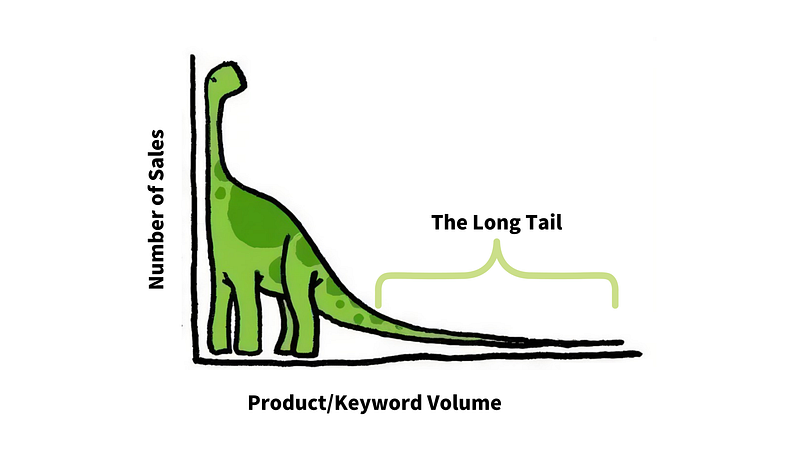
arkreen is strategically focused on penetrating the global residential solar PV panel data network market that shows characteristics of a long-tail REC market being underserved. All RECs are generated manually by licensed issuers from massive centralized solar farms. This data collection process is costly, tedious, and unauditable. It offers lower trustworthiness, and on the other hand, the transaction process of REC is not transparent, and usually, its price is a market set under the table. arkreen residential energy data collected will be tokenized, and then after that, REC transactions will be digital and transparent on-chain. This ensures immutable, verifiable, auditable data and transparent transactions. The RECs market has decades of history and still operates in its “good old days” way. This legacy style is becoming an obstacle and impeding growth in traditional liquidity markets. It’s no wonder we are starting to see startups aiming to shake up the market by digitizing assets that can be monetization on-chain.
Let’s jump back to our original topic of Long-Tail market characteristics and why there is real value in this unique approach for go-to-market strategies. To date, the distributed REC market size is in its infancy — it hasn’t existed in the past. On the other hand, the allocated renewable energy capacity market share is enormous. The legacy and antiquated Monitoring, Reporting, and Verification(MRV) system makes it costly to issue RECs for the fragmented residential solar PV. This is why we refer to the distributed RECs market as having vast, long-tail, untapped market potential. Empirically, the previously identified long-tail market characteristics can eventually evolve into a mass market environment. Utilizing e-commerce and a cost-efficiently provided platform for the SME, SMEs are assured of reaching billions of buyers. The Ark of the Holy Grail for long-tail markets is undoubtedly a more energy-efficient Green Ark. That is precisely why Arkreen Network integrates a Web3 economic model to complement IoT/Blockchain-enabled trusted data.
We must also explore the economic perspectives from what Web3 offers: a cost-effective and speedy way to bootstrap global physical infrastructure to scale exponentially. From a technical perspective, Arkreen Network offers a hardware mining device to connect to a solar PV panel. Sophisticated “Prosumer” Equipment owners will connect to the network by simply plugging arkreen miners into their equipment interfaces. The equipment owners will monetize equipment data converting the data into RECs, after which owners can enjoy incentive rewards and service income. arkreen wants to help well-intentioned individuals and sophisticated Prosumers obtain the benefits they seek and incentivize more people to jump on board to replace black (coal and oil-related) power with renewable energy.
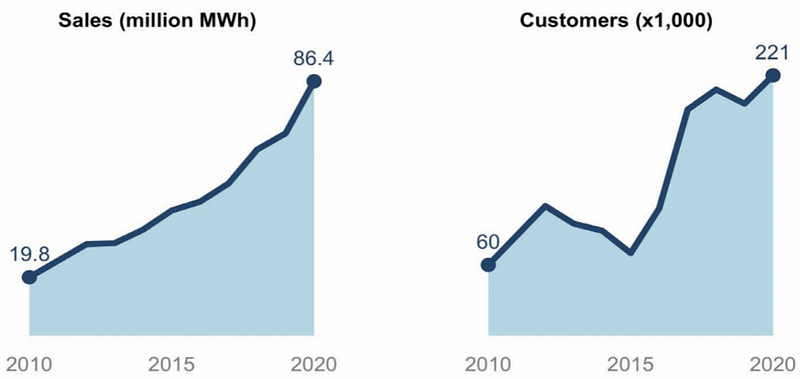
The U.S. Unbundled REC Price Reached $6.6/MWh, and Market Size is Near $600M
As we can see, the Inflation Reduction Act in the U.S. and the REPowerEU policy in the EU are all promoting residential solar PV usage. The installed residential solar PV capacity is around 100GW of power generated, which converts into well over 100 million RECs being locked, with a net worth estimated at 300 million dollars. While distributed REC naturally has a higher price than centralized RECs. In this perfect storm environment, we estimate the total residential capacity to experience tenfold growth potential.
We are in an energy transition period worth roughly trillions of dollars, and the front-runner, Tesla, has already shown us how ample the opportunity is. You can say we are witnessing a transition of energy and wealth. Many market disruptors will offer integrated solutions to create new waves of innovations. The antiquated Mass market of yesteryear is being purged as we read this, and a new long-tail economic model approach is taking shape.
By Arkreen on December 28, 2022.