Funding Abundance, Onchain: How Arkreen Makes Solar Energy DeFi-Native

The “abundance” era is no longer a distant narrative. Solar, batteries, robotics, and AI are driving the cost curves of energy and productivity down—fast. But abundance doesn’t arrive through technology alone. It arrives when finance is able to fund the expensive early deployments that unlock economies of scale for everyone else.
In Stani.eth’s Funding Abundance thesis, one point is especially important: DeFi has largely solved the supply side (global capital aggregation), but the bottleneck is the demand side—high-quality, scalable collateral and yield opportunities. Solar and storage are among the best candidates to fill that gap.
We agree—and we believe the hardest part isn’t solar economics. It’s making solar and storage verifiable, standardized, risk-manageable, and enforceable in a way that DeFi protocols can actually use.
That is what Arkreen is building.
Abundance is a Cost Curve and a Capital Curve
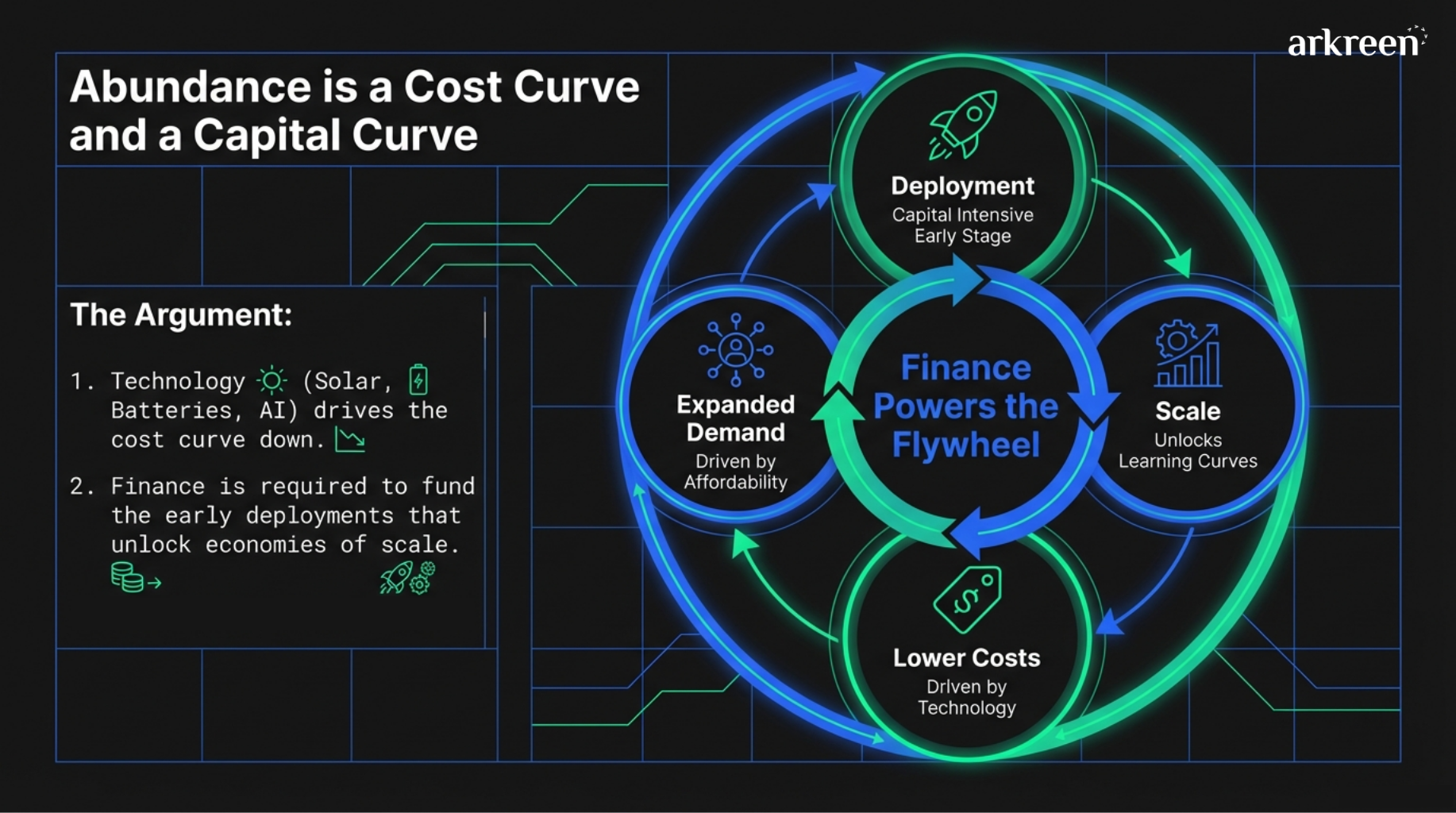
Abundance happens when something scarce and expensive becomes cheap, plentiful, and widely accessible. In energy, the deflationary momentum of solar and batteries is already real. But scaling from “proven” to “dominant” is fundamentally a financing challenge:
- Early deployments are capital intensive.
- Scale unlocks learning curves.
- Learning curves reduce costs.
- Lower costs expand demand—and the cycle accelerates.
This is the flywheel finance has powered throughout history. The next flywheel is being built around solar + storage.
DeFi’s Next Chapter is Demand-Side Collateral
DeFi has become extraordinarily efficient at aggregating liquidity. But lending markets don’t grow on deposits alone—they grow on borrow demand, which is constrained by:
- The availability of new collateral types
- The ability to price risk
- The ability to monitor performance
- The ability to handle “bad outcomes” (defaults, fraud, enforcement)
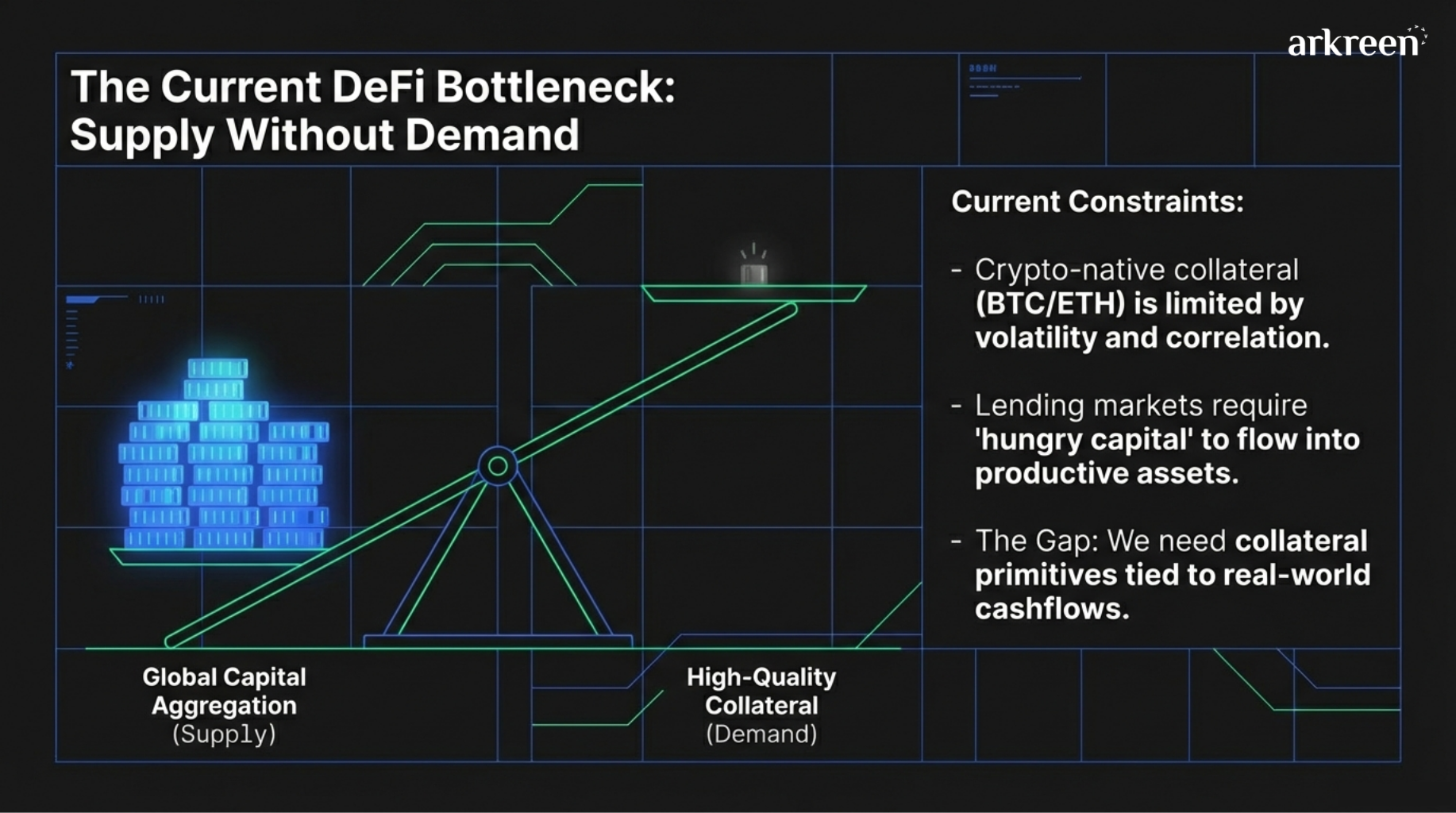
Crypto-native collateral (BTC/ETH) is powerful, but inherently limited by volatility and correlation. To absorb the next wave of “hungry capital,” DeFi needs additional collateral primitives tied to real-world cashflows.
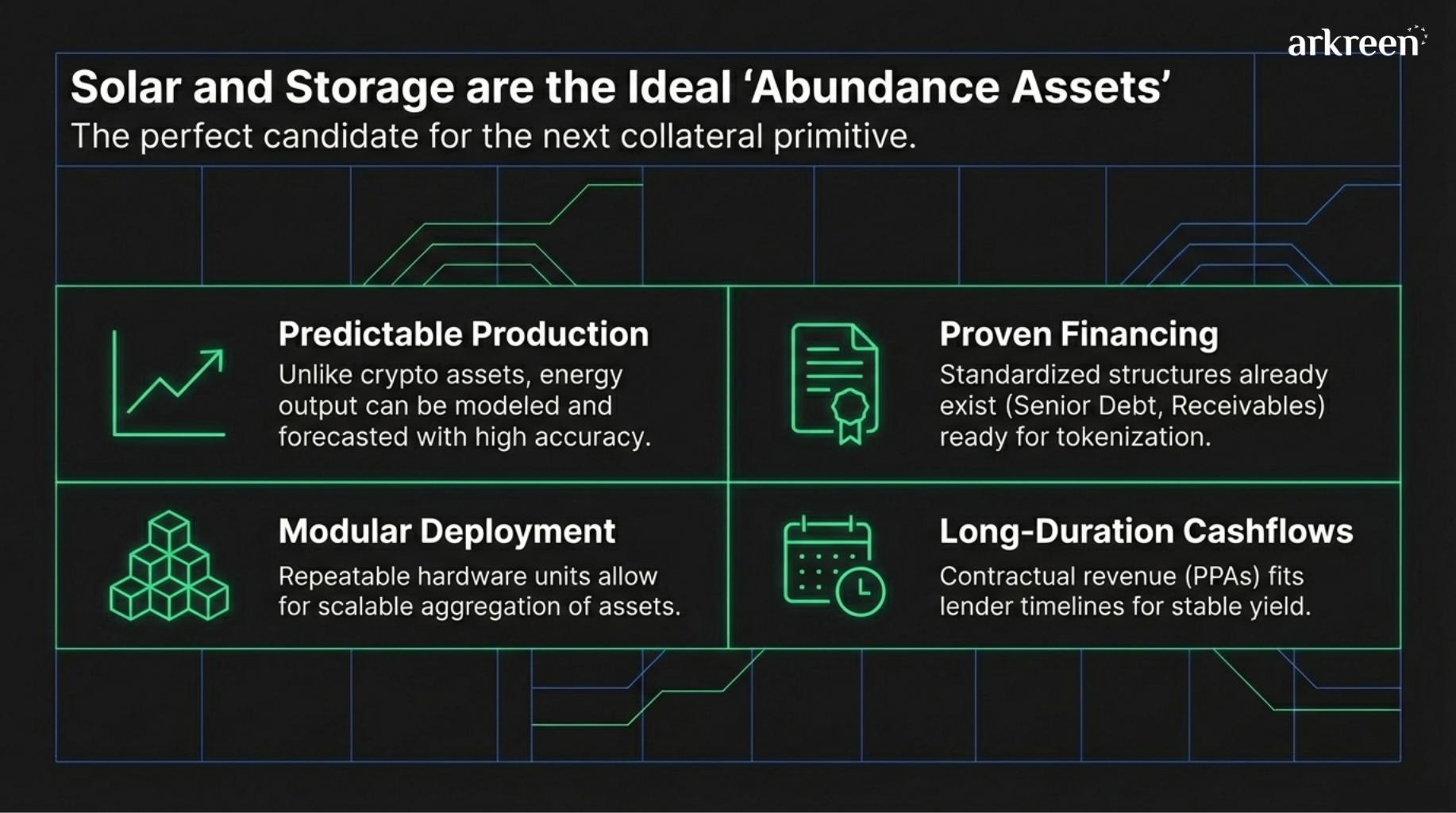
Solar and storage are ideal starting points:
- predictable production profiles
- proven financing structures (senior debt / receivables)
- modular, repeatable deployment
- long-duration, contractual cashflows (e.g., PPAs)
Yet they cannot simply be “ported on-chain” by narration alone.
Solar is Financeable—But Not Automatically DeFi-Native
Traditional finance can underwrite energy assets because it has an entire offline stack:
- metering and operational data systems
- audits and reporting
- SPVs, trustees, custodians
- legal enforceability and waterfall structures
- standardized risk frameworks
DeFi needs an equivalent stack that is composable, automated, continuously verifiable, and machine-readable.
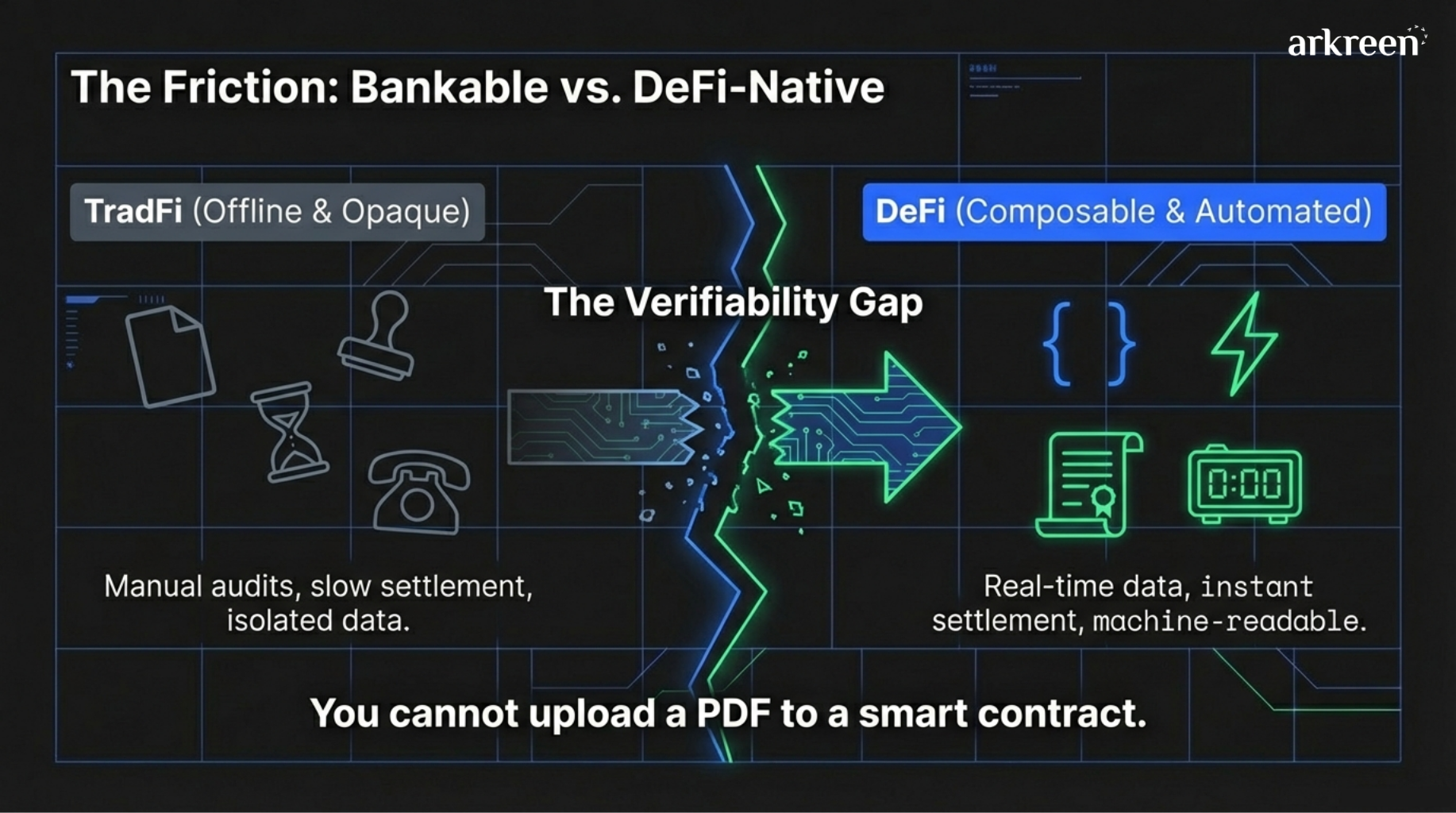
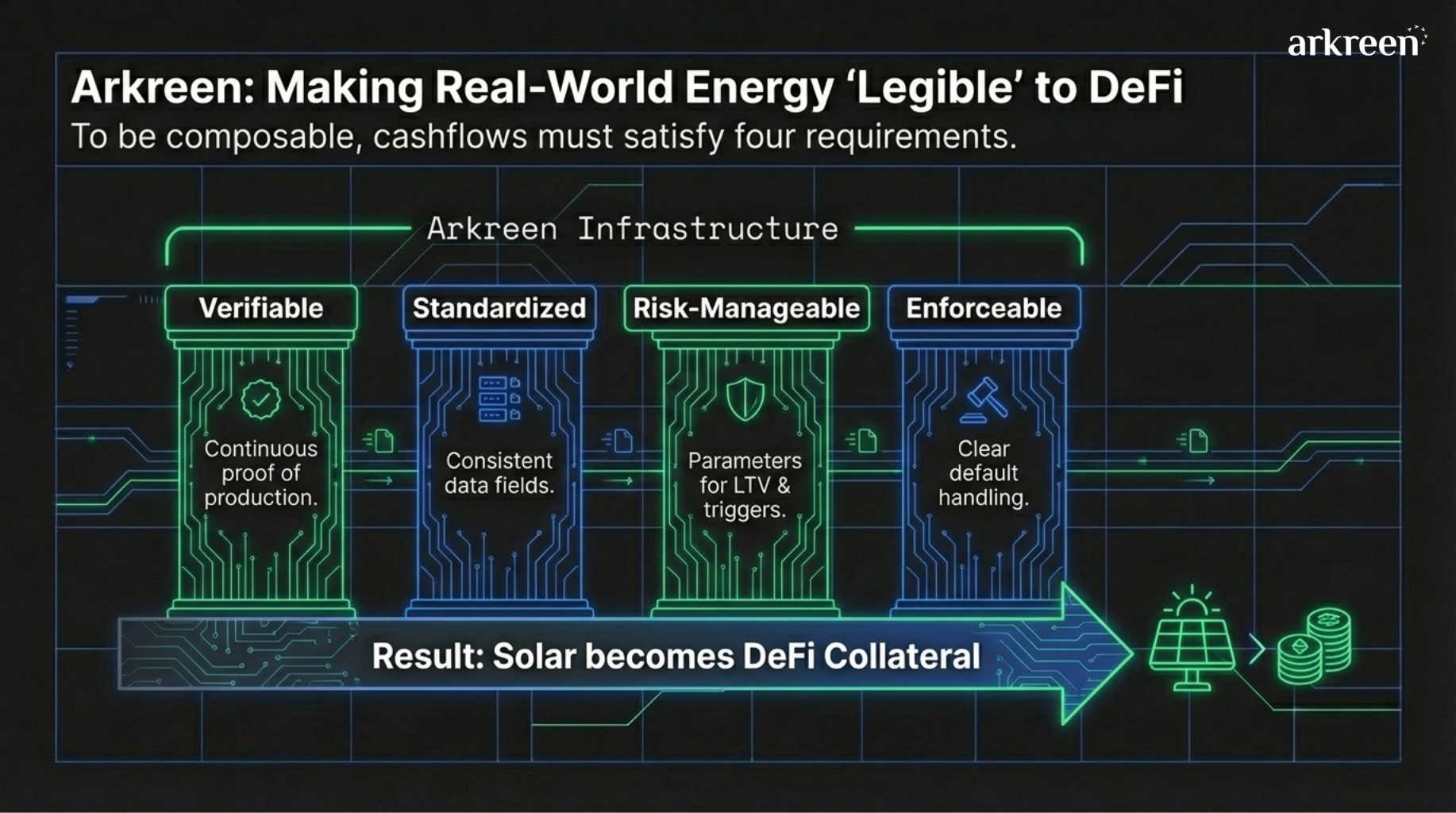
To become DeFi-native, solar/storage cashflows must satisfy four requirements:
- Verifiable — continuous proof of production, performance, and cashflow alignment
- Standardized — consistent data fields and risk metrics across geographies and projects
- Risk-manageable — parameters that translate into LTVs, caps, triggers, and monitoring
- Enforceable — clear default handling: rights, recourse, and execution paths
This is the missing bridge between “solar is bankable” and “solar is DeFi collateral.”
Arkreen: Proof + Data + Standardization for Abundance Assets
Arkreen is building the infrastructure to connect distributed energy assets to the on-chain world—so that real-world energy and cashflows can become usable financial primitives.
A living energy data network
Arkreen already operates a large-scale energy data network:
- 300K+ energy data nodes
- 140+ GWh onchain tokenized energy
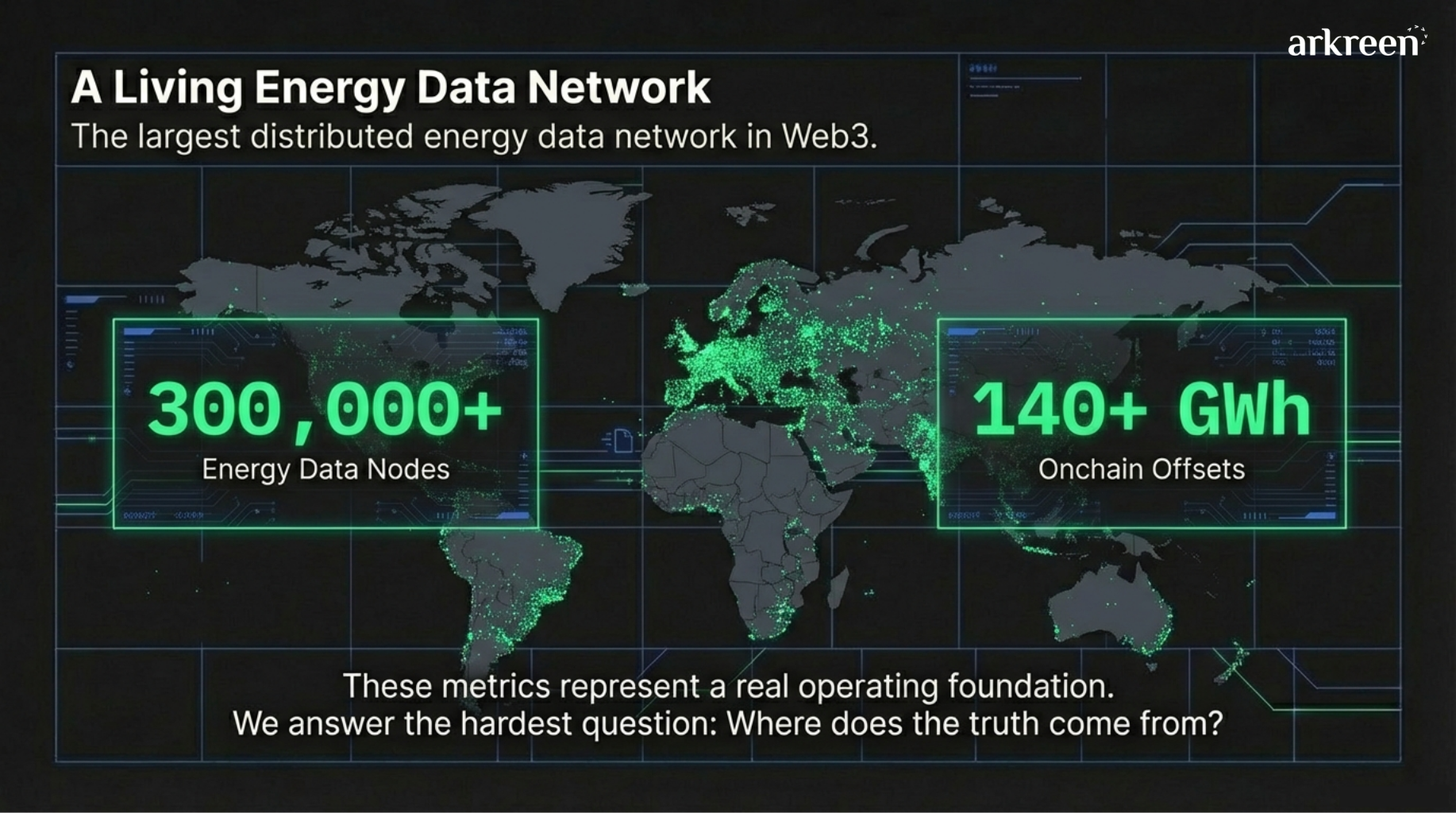
These are not marketing metrics. They represent a real, operating foundation for answering the hardest question in onchain energy finance:
Where does the truth come from—and how does it stay true over time?
A Proof-of-Energy pipeline
To make energy cashflows DeFi-native, the system must do more than publish one-time reports. It must provide continuous verification.
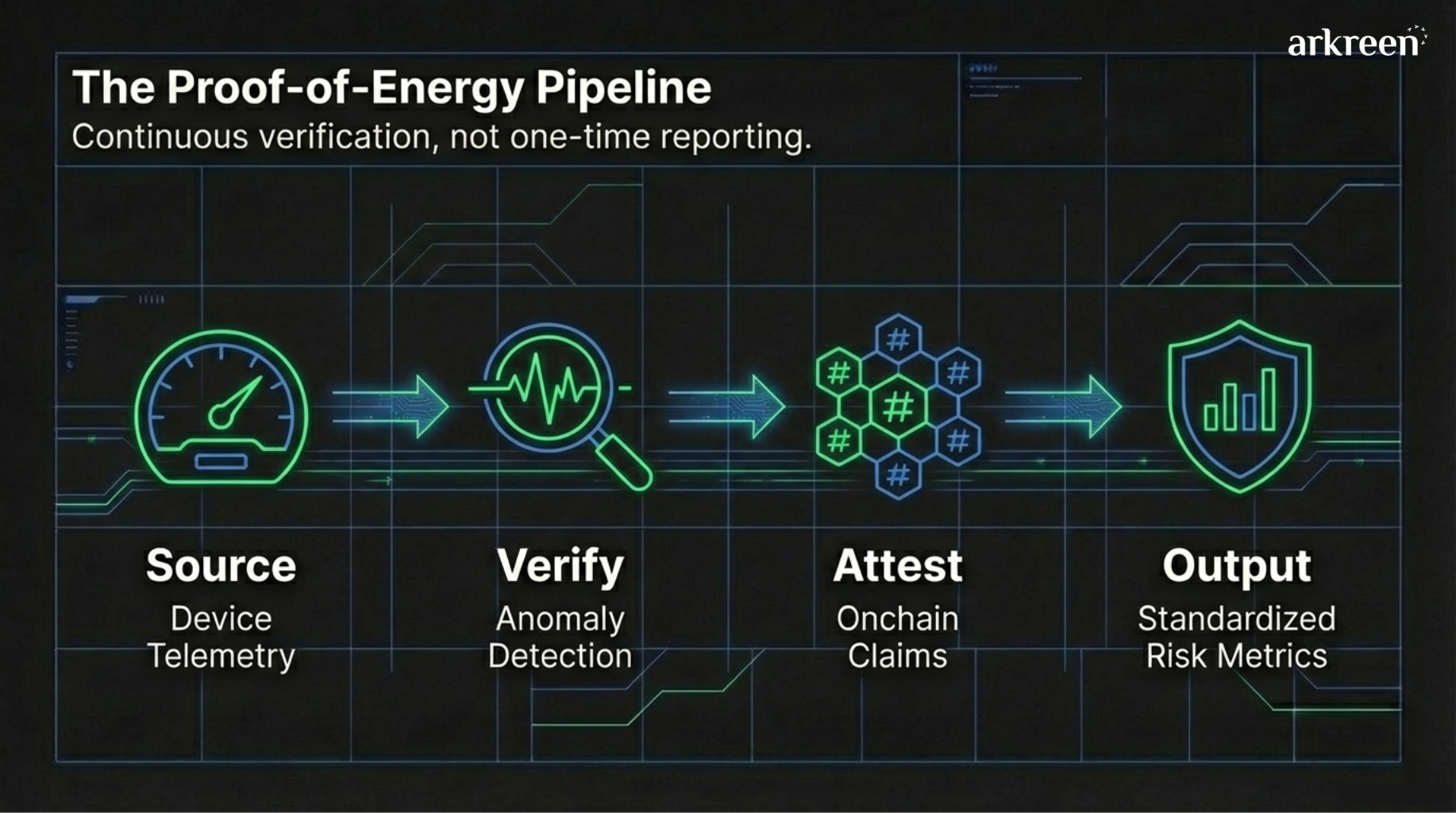
Arkreen’s pipeline is designed as:
Device telemetry (meters/inverterson-chain / BMS / operations platforms) → verification & anomaly detection → audit sampling → onchain attestations (hash/claims) → standardized risk outputs
The output is not a PDF.
It’s a stream of evidence and metrics that can be consumed by risk engines and market configurations.
Standardized risk metrics for DeFi
Onchain lending ultimately asks one thing:
What is the safe borrowing power of this collateral right now?
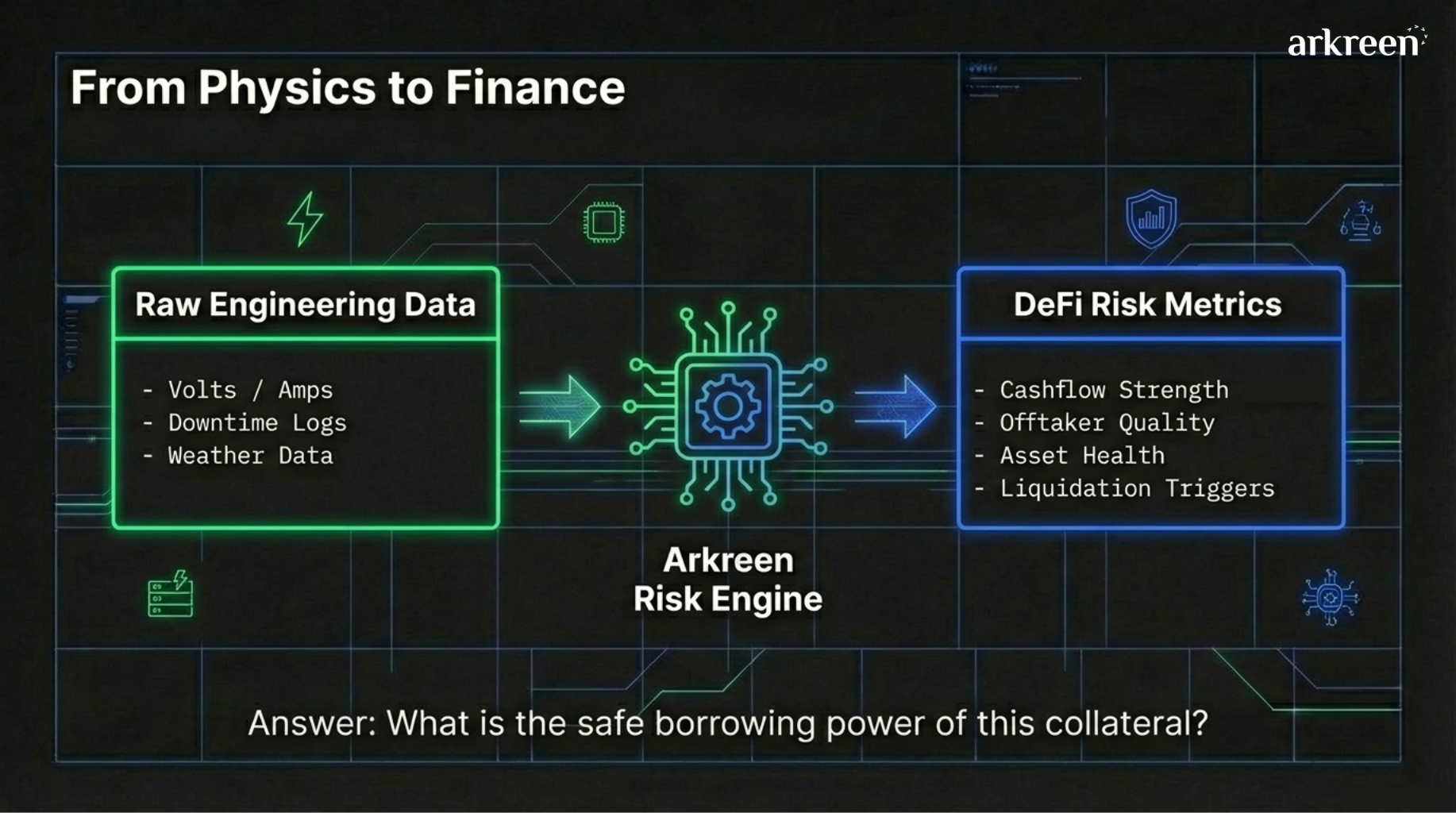
So Arkreen focuses on translating project finance reality into protocol-readable inputs such as:
- Cashflow strength (payment cadence, seasonality)
- Offtaker quality and concentration (PPA counterparties)
- Asset quality (warranties, insurance, degradation, O&M SLAs)
- Diversification (geography, project mix, correlation)
- Deviation monitoring (underperformance, downtime, forecast error)
The goal is simple: make abundantmeters/inverters assets legible to DeFi.
From Thesis to Execution: A Practical Path to Onchain Abundance Finance
Abundance-backed finance should not start with a massive, all-at-once RWA program. It should start with a phased approach that proves verifiability and risk discipline.
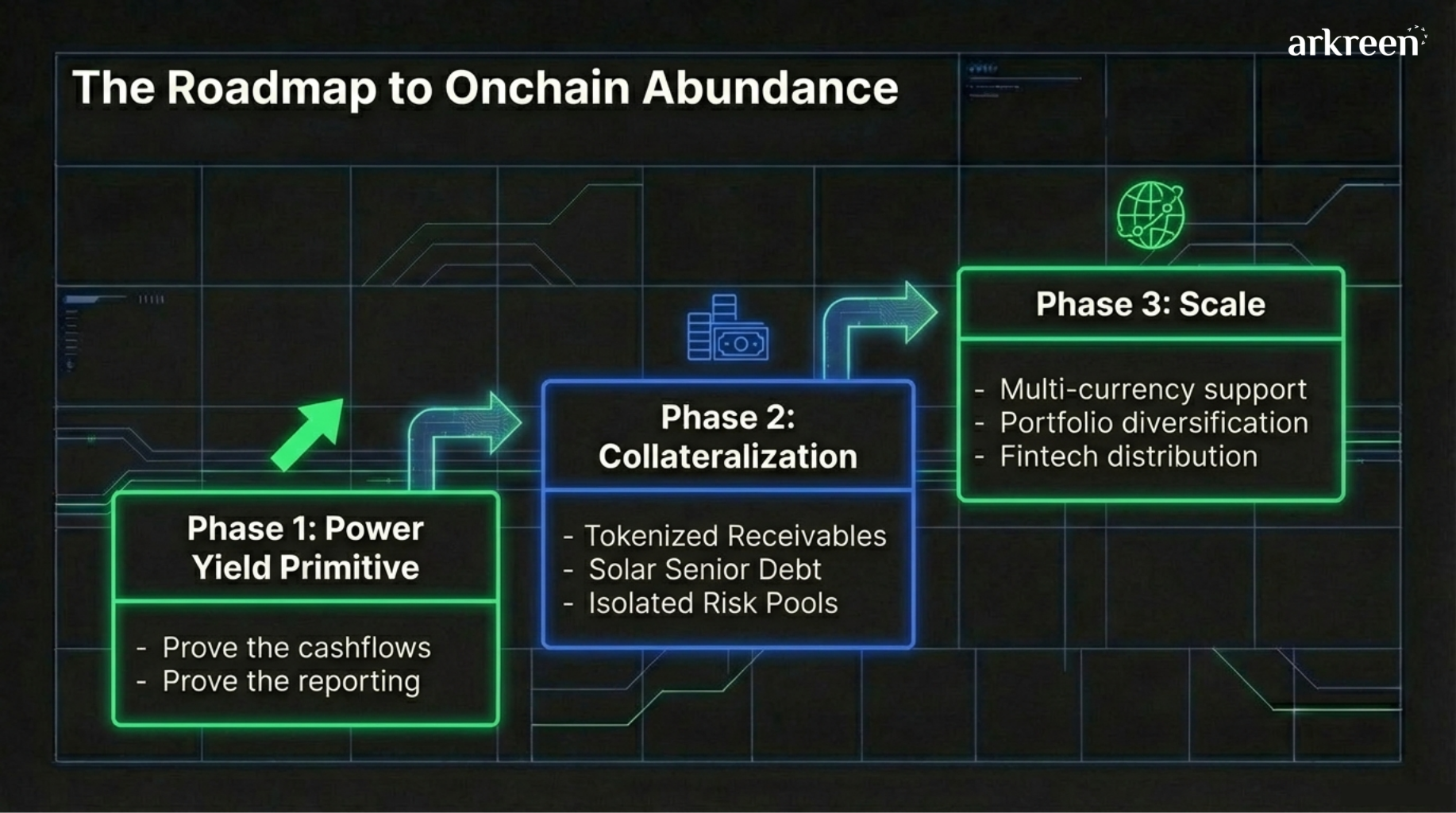
Phase 1: Powe Yield Primitive (prove cashflows + proofs first)
Launch a pilot product where verifiable energy cashflows can be distributed as a “power yield” primitive:
- Arkreen provides proofs, monitoring, reporting, and audit sampling
- the market validates reliability and operations at low complexity
Phase 2: Tokenized Receivables / Senior Debt as Collateral (solve demand-side collateral)
Bring tokenized PPA receivables or solar senior debt onchain as collateral in risk-isolated configurations. This is the most direct embodiment of the demand-side thesis.
Phase 3: Portfolio scale, multi-currency, distribution
Once primitives and risk models are proven:
- scale across more projects and geographies
- expand to local-currency yield opportunities
- distribute via DeFi and fintech channels
Why This Matters: The Collateral Standard is Changing
For centuries, global finance has been shaped around “scarcity assets”—claims on limited resources and scarcity rents. But abundance technologies invert the logic:
- scale lowers costs
- lower costs expand capability
- capability expands economic output
- output expands demand for more abundance infrastructure
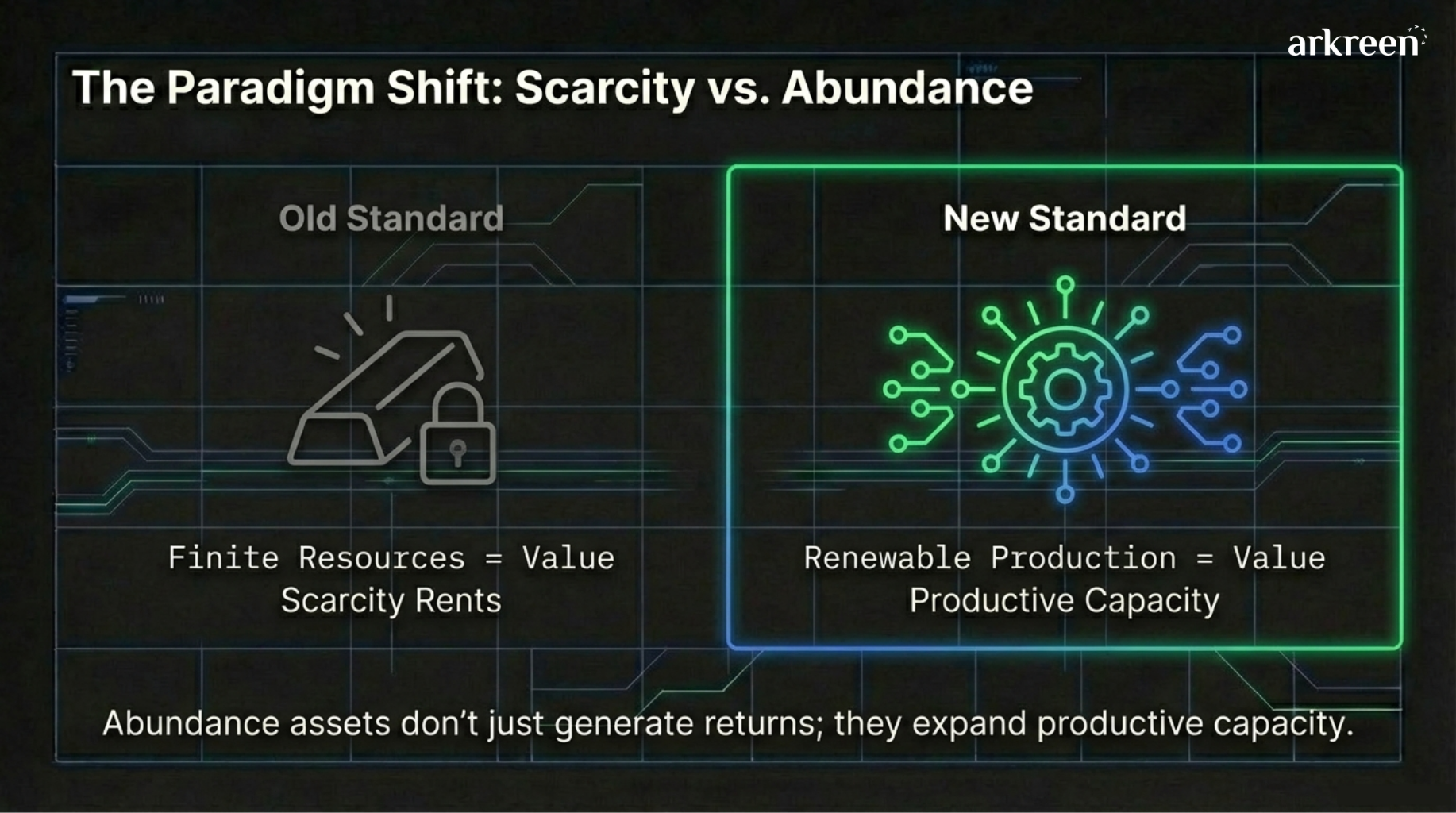
Abundant assets don’t just generate returns. They expand productive capacity.
If solar and storage become foundational infrastructure for the next century, then financing them on-chain is not a niche RWA experiment—it is a new collateral category that can unlock real, non-correlated stablecoin demand and a more productive capital allocation system.
Closing: Turning “Funding Abundance” into a Working System
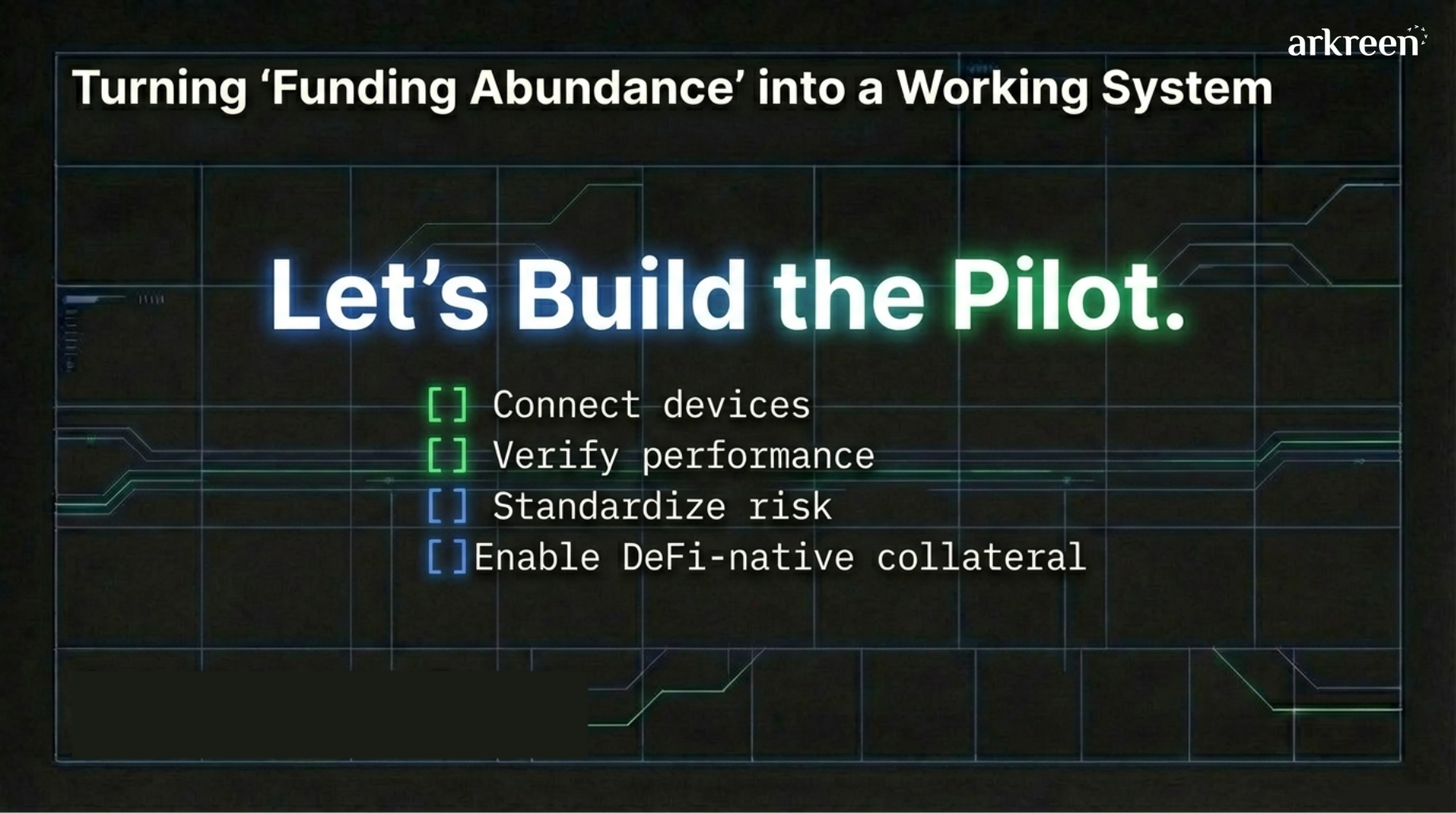
The abundance era won’t be funded by ideas alone. It will be funded by systems that can connect real-world production and cash flows to on-chain markets with integrity.
Arkreen is building that bridge:
- connect devices and projects
- continuously verify performance
- standardize risk metrics
- enable DeFi-native collateral and yield
If you’re building protocols, fintech distribution, or real-world energy portfolios—and you believe abundance assets will define the next collateral standard—let’s collaborate on a focused pilot that makes this thesis real.
Abundance is not the endpoint. It’s the beginning of a new financial stack—one backed by productive assets that build the future.